
Contents
Hwadam Botanic Garden is a strong autumn day-trip choice if you want landscaped woodland and colorful leaves without committing to a mountain hike. Plan admission first, decide how much walking you want, and only then choose a monorail ticket. The garden is near Gonjiam in Gwangju, Gyeonggi Province, not Gwangju Metropolitan City in southwestern Korea.
For a 2026 visit, keep three separate questions in mind: whether the garden is open on your date, whether the required entry slot is available, and how the leaves actually look. A peak-season booking period describes operations, not a guarantee of peak foliage.

Licence & attribution
Is Hwadam worth visiting in autumn?
Choose Hwadam for a combination of woodland paths, cultivated gardens and a scenic monorail. Its defined entrance and visitor facilities make planning more straightforward than selecting an unfamiliar hiking route. The trade-off is the need to coordinate a timed booking with a final road transfer from the railway station.
Photographers should prioritize time on foot rather than assume the longest monorail ride delivers the fullest experience. Walking lets you stop and change perspective. For a group with limited stamina, the useful question is which walking section a ticket replaces, not simply which option is most popular online.
A day tour can simplify transfers. Check the selected package’s admission, monorail, meeting point and cancellation terms; a listing does not guarantee availability on your date.
When to go: bookings and foliage are different calendars
Choose a visit date, then check the available garden-entry and monorail sessions. Seasonal booking arrangements and leaf color are different calendars: an available date is not a guarantee of peak foliage or seats on every ride.
Different trees and slopes change color at different speeds. Build the day around confirmed opening arrangements, then check recent photographs and the weather as departure approaches. Wind and rain can alter the scene quickly. A photograph uploaded this week may still have been taken in a previous autumn, so look for its capture date as well as its location.
Start with the seasonal notices on the Hwadam website. Do not reuse last year’s peak date as a promise for 2026. If a weekend is your only option, avoid a tightly timed dinner, performance or airport connection immediately after the visit.
Admission, Hwadamchae and monorail tickets
Garden admission and the monorail are separate purchases. Hwadamchae exhibitions are another item to check in the selected package. Standard adult garden admission is KRW 11,000, while an adult full-loop monorail ticket costs KRW 9,000. Your selected date, age category and final booking screen determine the applicable price.
Buy in this order: admission, the ride that fits your walking plan, then any exhibition you genuinely want to see. For a foliage-focused outing, leaving some unscheduled outdoor time is valuable. Read the admission and transport guide rather than inferring inclusions from a package photograph.
Booking and using your ticket
Enter the booking service through the official site. Follow the service linked from the garden’s current booking interface, using the appropriate language option. Keep the original ticket link and order information. Do not assume a resale screenshot will work as an admission credential.
Tickets and rides are used at their specified times. If you purchase several items together, check each cancellation separately instead of assuming one cancellation removes everything. Review the booking and ticket-use instructions and order-management guidance before making changes.
Which monorail option makes sense?
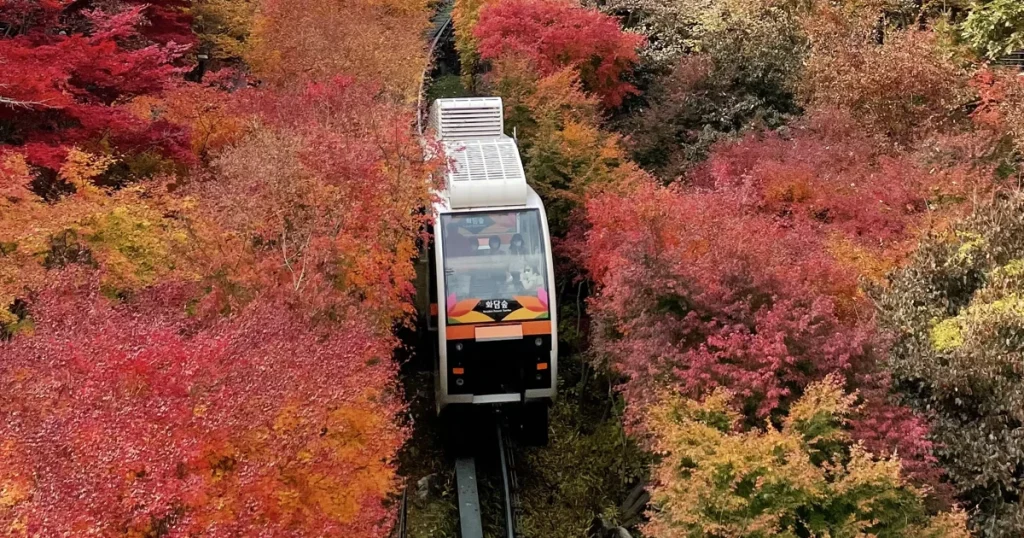
The main options run from Platform 1 to Platform 2, from Platform 1 to Platform 3, or around the full loop back to Platform 1. Decide according to the walk remaining after you leave the car. The full circuit takes about 20 minutes, but it is not a hop-on, hop-off sightseeing pass.
A shorter ride can suit visitors who want help with part of the route and then prefer to take photographs on foot. A loop suits those prioritizing the ride itself. Reboarding after leaving the loop partway through is not permitted. The cars mainly accommodate standing passengers, with priority seating for those who need it; check the folding requirements for strollers and wagons.
The monorail route diagram and ride rules show the platforms and ticket sectors. Use that diagram for the garden, not as a door-to-door transport map from Seoul. A route drawn as a short line can still involve gradients or a substantial walk.
Getting there from Seoul
Train and a final local transfer
For public transport, Gonjiam Station on the Gyeonggang Line is the rail connection. Use a taxi or Gwangju bus 9 for the onward trip. Your route to Gonjiam depends on where you are staying, so compare the actual interchange sequence from your hotel rather than using one generic Seoul journey time.
Reaching the station is not the same as reaching the ticket gate. Allow for the final transfer, any walk from the arrival or parking area, and entry checks. Check the return connection before leaving Seoul. A taxi queue on arrival does not guarantee an immediately available return vehicle, particularly for a group with bulky strollers.
Organized tours and driving
A day tour can reduce transfer planning, but examine the selected option: garden admission, monorail, meals and additional attractions may be treated differently. A multi-stop trip brings transport convenience at the cost of fixed time in the garden. Drivers should also budget for parking and reaching the entrance, not just the road time shown by navigation.
Before booking a tour, compare the selected date, meeting point, garden time, admission and monorail inclusions, then read cancellation terms. Multi-stop combinations vary; the title alone does not establish what is included.
A relaxed walking and photography plan
On arrival, identify your platform, departure time and return direction before stopping for a long photo session. Then follow the open paths, using the monorail only as planned. Reserving roughly half a day for the garden and its immediate connections is a practical planning allowance, not an required minimum or a guaranteed visit duration.
Start with broad woodland views, then look for details in leaves and paths. Stay behind barriers when photographing the monorail; never step onto the tracks or obstruct moving visitors for a shot. Backlit leaves can look beautiful, but a bright sky may darken the foreground on a phone. Test exposure instead of compensating later with heavy red saturation.
If a viewpoint is busy, use a wider composition or return when the flow of visitors eases. Wet leaves and timber surfaces can be slippery after rain. There is no need to reproduce a social-media picture at the expense of safe footing or access for everyone else.
Families, mobility and rainy weather
The operator describes gently graded paths suitable for visitors with strollers or wheelchairs. That does not mean every visitor will find a long garden circuit effortless. Choose a realistic walking distance, include rest stops, and ask the operator directly about any specific accessibility requirement. Check how a mobility device or stroller can be handled before selecting a ride.
For light rain, bring shoes with reliable grip and rainwear that leaves your hands free. Wind, weather or maintenance can interrupt the monorail. If riding it is the main reason for going, decide in advance whether you would still enjoy a walking-only visit, then review the day’s operating notices before departure.
Frequently asked questions
Is Hwadam worthwhile without a monorail ticket?
Yes, provided you have valid admission and everyone can manage the planned walk. Walking provides time to stop and photograph details that pass quickly from a moving car.
Which Gwangju is Hwadam in?
Gwangju in Gyeonggi Province, near Gonjiam. Use the Korean name 화담숲 or the complete official address to avoid confusing it with the southwestern metropolitan city.
Can I get off the full loop and board again?
No. The ticket does not allow reboarding after leaving the loop partway through. Choose your exit and walking plan before buying.
Does the autumn booking season guarantee peak color?
No. It describes a period of visitor operations. Actual color depends on species, position and weather; use recent on-site images and current notices.
Should I combine Hwadam and Nami Island in one independent day trip?
For a relaxed foliage-focused day, choose one. Both involve their own transfers and meaningful time on foot, while Hwadam also has timed bookings. Combining them can leave too little flexibility for the reason you came.
What should I reserve first for an autumn visit?
Secure garden admission first, then choose a ride that fits your walking plan and any exhibition you want. Check each item’s session and cancellation terms.
Does a peak-season reservation guarantee peak leaf color?
No. Ticket seasons describe operations; weather, species and position affect the leaves. Check recent photographs with a clear capture date before visiting.
Does admission include the monorail?
Standard garden admission and the monorail are separate. Check the selected package and coordinate both times before planning the walk between the gate and platform.
Does the subway run to the entrance?
No. Gonjiam Station is the rail connection; a taxi or operating local bus is still required for the onward trip, followed by the entrance approach.
Is the monorail compulsory with a stroller?
No. The operator describes gently graded walking paths, but distance and stamina still matter. If you ride, check folding and boarding requirements in advance.
If timed countryside bookings and transfers do not suit your trip, consider Seoul city foliage and ginkgo walks within districts already on your itinerary.