
Contents
For a first car-free east Jeju day, choose one core area: Seongsan Ilchulbong plus Seopjikoji for volcanic scenery, or Hamdeok and Seoubong for a beach day with fewer connections. Udo needs a ferry and Bijarim lies inland, so eastern attractions do not form one effortless hop-on line. Choose the landscape first, then the bus, a taxi connection or a tour.
Divide the east into three useful areas
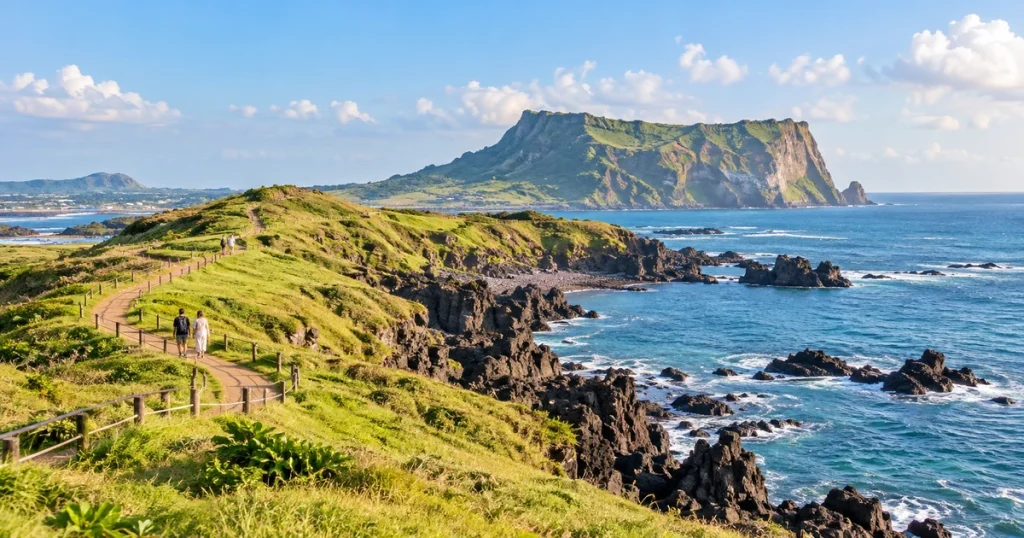
Hamdeok and Seoubong on the northeastern coast suit beach-and-café plans without traveling all the way to Seongsan. Seongsan, Seopjikoji and Aqua Planet form an eastern-end cluster of volcanic scenery, cape and aquarium. Bijarim is an inland forest with a separate connection. An eastern stay can start directly there; Seogwipo and Jungmun guests should not copy a north-coast order designed for Jeju City.
Two substantial stops can still be varied. Seongsan gives a high crater view while Seopjikoji reveals grassland and rocky coast at walking level; Hamdeok and Seoubong show one bay from different heights. Briefly checking off multiple beaches can turn the day into waiting for buses. Removing one transfer-heavy stop often buys a proper lunch and a much better walk.
Select an eastern itinerary before comparing meeting points, time at each stop and inclusions. A product offering several routes does not mean every option visits every attraction.
Route A morning: give Seongsan the main block
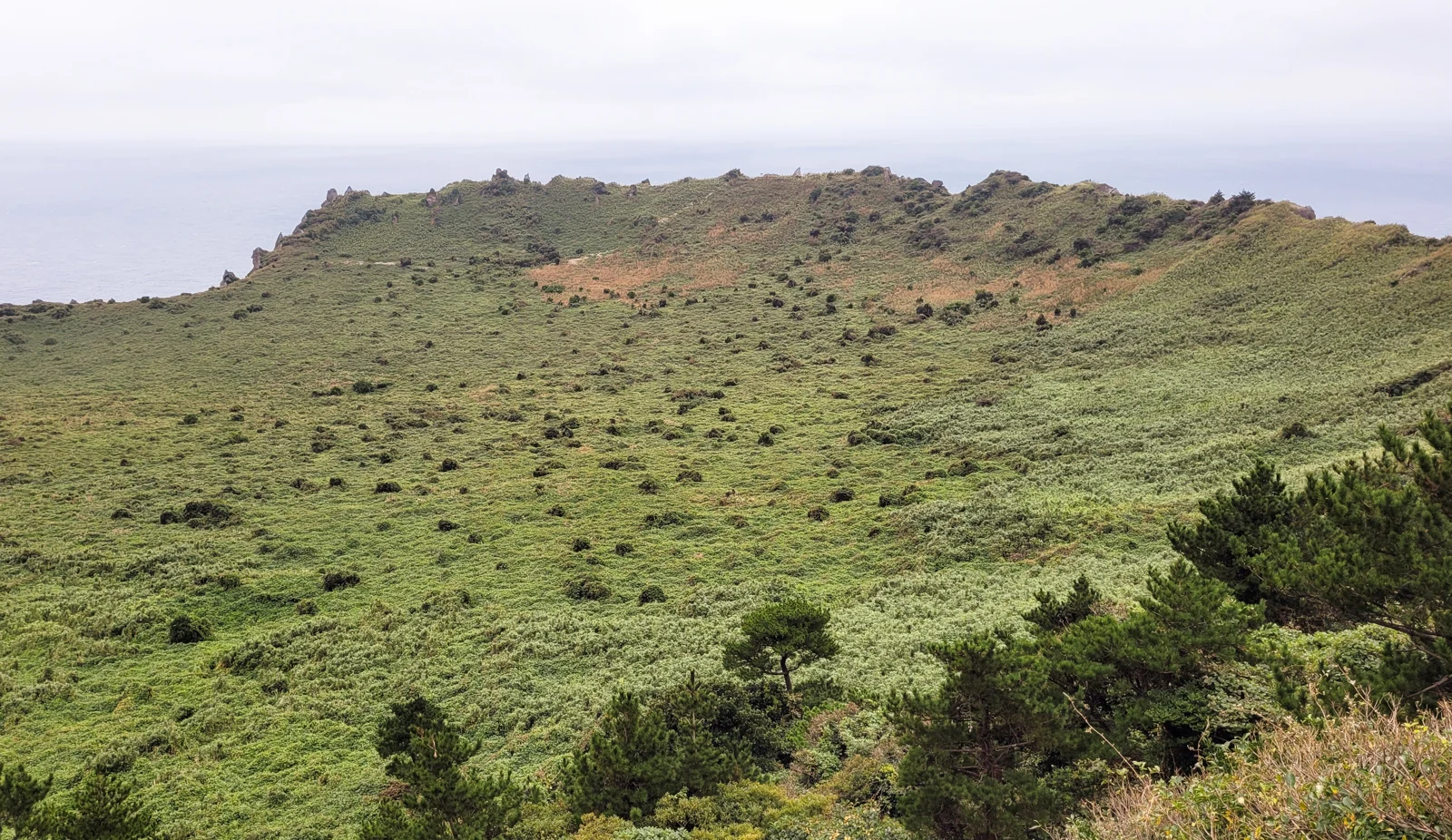
From Jeju City, head to the Seongsan Ilchulbong entrance, searching 성산일출봉 rather than the port. Allow around 1.5–2 hours for ticketing, the stairs, time at the summit and the descent, then adjust for your pace. For the silhouette, choose the free lower area and save energy for the afternoon coast. The summit gives views into the crater and across the surrounding coast; lower viewpoints better show the overall shape. Paid access is not automatically the right choice for everyone.
Seongsan has seasonal gate times and a first-Monday monthly closure, shifted to the following day if it is a public holiday. Check the date before committing the route. Eat in the Seongsan area before continuing to Seopjikoji. Sunrise requires a separate nearby stay or early-transport plan; a normal eastern day tour or bus journey is not a sunrise service.
| Block | Seongsan-focused | Relaxed Hamdeok |
|---|---|---|
| Morning | Travel to Seongsan, summit or lower area | Bay paths and beach |
| Lunch | Eat near Seongsan | Eat in Hamdeok |
| Afternoon | Choose Seopjikoji or Aqua Planet | Choose Seoubong or a café |
| Return | Leave eastern end according to connections | Return to Jeju City or the original base |
Route A afternoon: choose the cape or aquarium
Search 섭지코지 for the cape, with open grassland, cliffs and Seongsan in the background. Volcanic material and offshore rock formations make it more than another beach; look for the historic coastal signal station in the grassland. Allowing around 1–1.5 hours gives time for a manageable walk, photos and rests without forcing the farthest endpoint. Spring flowers are seasonal, not a year-round promise.
For ordinary rain or an indoor preference, replace the afternoon with Aqua Planet, search 아쿠아플라넷 제주. A half day fits better than treating it as a one-hour shelter. Displays and Ocean Arena have different rhythms, so check sessions first. Check the day’s closing time, ticket-sales cutoff and last admission before setting off. The last transfer from Seongsan still matters; the attractions are in the same region, but you still need to travel between them.
Route B: a relaxed Hamdeok bay day
Search 함덕해수욕장 for Hamdeok, with pale sand, water and seaside food options. Start along open coastal paths to see the bay and neighboring Seoubong from different angles rather than immediately climbing. Walk in the morning, eat by the sea and choose a café or hillside afterward. The strength of this plan is its flexibility without a distant next appointment.
Search 서우봉 for Seoubong immediately east of the beach. Its grassy slopes reveal the bay’s curve and water colors from above. It involves ascent, so do not equate the climb with a waterfront stroll. Staying at beach level still makes a worthwhile half day. Swimming depends on the designated season and local rules; autumn and winter plans should emphasize views and walking rather than assuming year-round bathing.
Bijarim and Udo require a trade-off
Search 비자림 at 55 Bijasup-gil for the old torreya forest. It changes the day from exposed coastline to canopy, trunk textures and filtered light. Plant and walking enthusiasts can substitute it for a coastal stop. Its inland location adds bus-connection work, while a charter can incorporate it more easily. It remains outdoors; shade is not protection from severe weather or wet trail conditions.
Treat Udo as its own main day because port procedures, the ferry, landing port and island transport all consume time. If pairing it with Seongsan, remove Seopjikoji, Hamdeok and Bijarim and let the return sailing control the plan. For a first car-free trip, separate Udo from the mainland’s crater-and-cape day so each transport-dependent visit has enough time.
Using 101 and 201: express is not always closer
The 201 is a slower eastern coastal service with more stops and does not directly serve Jeju Airport. Express 101 serves the airport and can help with longer eastward travel, but fewer stops mean checking the final approach carefully. From a hotel, compare full outward and return routes instead of assuming an airport route is equally convenient from every Jeju City address.
Jeju city buses are cashless; prepare a supported payment method. A bus plus a final taxi is a useful comparison for Seopjikoji or the aquarium: use public transport for the long leg and spend on the connection that removes an awkward wait. Check passenger and luggage capacity. Search the actual date and time, and include the walk to the stop and service interval rather than only in-vehicle estimates.
Compare how a tour visits, not just how many stops
When comparing Jeju UNESCO tours, select an East option and check whether its itinerary includes Seongsan, Seopjikoji or Bijarim. Do not combine inclusions from the western and southern options. Check meeting and drop-off points, language, meals, admission and whether Seongsan includes climbing. A fixed group tour removes connection work but sets a shared pace; it does not give unlimited time at each stop.
A private car suits a group needing a tailored pace. Specify the hotel, end point, luggage and region, and ask whether the plan fits the booked hours. Check admission, parking, driver meals and overtime separately. A good charter still focuses on combinations such as Seongsan–Seopjikoji or Bijarim plus one coast, using the vehicle to solve geography while preserving time outside it.
Let the budget and base support the route
Separate the budget into main return transport, last-mile connections, admission and meals. Low bus fares do not guarantee the lowest total after several taxis, and included attraction tickets do not imply lunch or hotel pickup. Staying in Seongsan can reduce repeat transfers for another eastern or Udo day, but hotel changes add baggage logistics. For one eastern day, a complete return from the existing base may be simpler.
Before leaving, confirm the main attraction’s opening, the key connection and the time to start home. Keep minor additions removable rather than prepaying an inflexible chain. Crater-and-cape for fair weather, Hamdeok for a gentler day, and an indoor variation when transport permits cover most first visits better than one long all-weather checklist.
Frequently asked questions
Can I explore without driving?
Yes. Choose two main stops and add a final connection where needed.
How do 101 and 201 differ?
101 has fewer stops and serves the airport; 201 is a slower coastal route without direct airport service.
Can Udo be added?
Only with a ferry-led plan that removes most other eastern stops.
Must I visit both Hamdeok and Seongsan?
No. Each can anchor a different day.
Is Seopjikoji admission paid?
General coastal access is free; parking and other facilities are separate.
Is Bijarim an indoor rainy-day stop?
No. It is an outdoor forest subject to weather and controls.
Do eastern tours always collect at hotels?
No. Check the selected package’s meeting and drop-off points.
Can I pay cash on the bus?
Jeju city buses are cashless; prepare a supported method.
For individual trails and access details, see Seongsan Ilchulbong guide, Seopjikoji walks and transport, Bijarim Forest trails.